What Not to Put in an Ultrasonic Cleaner: Material Compatibility Guide
Introduction
Ultrasonic cleaning is remarkably versatile. It strips grease from engine blocks, carbon from pistons, polishing compound from precision parts, and flux from circuit boards, often in the same machine with only a change of settings. That versatility creates a dangerous misconception: the belief that anything can be dropped into an ultrasonic bath.
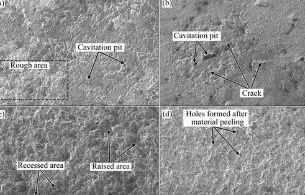
In reality, cavitation is an intense mechanical process, and when it is combined with heat and aggressive chemistry, it can etch, pit, crack, swell, or completely destroy certain materials. A single incompatible part can be ruined in minutes, and some damage is invisible until the component fails in service.
Stainless steel: The benchmark material; resists most alkaline detergents.
- Carbon steel and cast iron: Effective but requires rust inhibitor.
- Titanium: Strong and chemical-resistant; safe in most baths.
- Nickel alloys: Generally compatible with standard alkaline cleaning.
⚠️ Require Caution
- Aluminum: Use neutral detergents and higher frequency (40-80 kHz).
- Brass & Copper: Avoid strong alkali; dry promptly to prevent tarnish.
- Magnesium: Highly reactive; requires specialized chemistry.
- Zinc: Dissolves in strong alkali/acid; keep cycles short.
Special Note on Mixed Metals
Never clean aluminum and steel together. Contact between dissimilar metals can drive galvanic corrosion.
Surface Coatings and Finishes
Safe
Hard anodized aluminum and robust cured powder coatings are usually resistant.
Caution
Thin plating (Chrome/Zinc), black oxide, and mirror finishes can be stripped or pitted.
Plastics and Polymers
| Category | Materials |
|---|---|
| Generally Safe | PE, PP, PVC, PEEK, Nylon, Delrin |
| Require Testing | Polycarbonate, Acrylic, ABS |
| Generally Avoid | Foam, Thin-walled parts, Adhesive-bonded plastics |
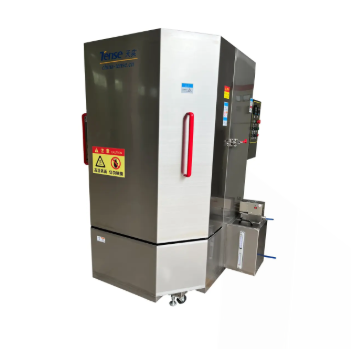
Industrial Cabinet Parts Washers TS-P Series
Short Description
⚡ Electronics
Safe: Bare PCBs, rigid assemblies with conformal coating.
Avoid: Microphones, speakers, battery-powered devices, fine wire bonds.
❌ NEVER PUT IN
- Cracked/Fatigued components
- Soft gemstones (Pearls, Opals)
- Organic jewelry (Coral, Amber)
- Micron-thin gilded surfaces
- Food, skin, or living items
How to Test Compatibility Safely
1. Identify: Check material and coating against detergent charts.
2. Start Gentle: Room temp, neutral chemistry, high frequency.
3. Sample Run: Use one sacrificial part and inspect under magnification.
4. Measure: Check dimensions and weight for tolerances.
5. Dry & Cool: Some damage appears only after the cooling phase.
6. Scale Up: Document settings once validated.
Conclusion
Ultrasonic cleaning is Broadly effective, but not universal. Damage rarely comes from the ultrasonics alone; it comes from the combination of cavitation, chemistry, and heat.
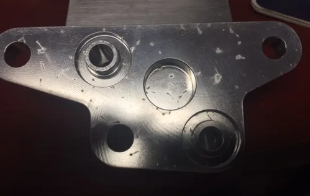
For guidance on cleaning a specific material or part family, contact Tense with your material and soil details.
Frequently Asked Questions
Q: Is aluminum safe to clean in an ultrasonic cleaner?
A: Yes, with neutral detergent, moderate temperature, and 40–80 kHz frequency. Strong alkalis will etch it.
Q: Can I clean rubber seals and O-rings ultrasonically?
A: Viton and Silicone are usually safe; natural rubber may swell or crack. Removing seals before cleaning is safest.
Q: Will ultrasonics strip chrome or paint from parts?
A: Cured paint survives, but damaged or peeling coatings will be lifted. Always test a non-critical area first.