Ultrasonic Parts Cleaning for Construction & Heavy Equipment Workshops
Introduction
Heavy equipment workshops operate on a different scale from ordinary automotive repair shops. Excavators, bulldozers, wheel loaders, dump trucks, and mining machinery contain large, heavy components—engine blocks, hydraulic cylinders, pumps, valve blocks, final drives, and track components—coated in the heaviest contamination found anywhere in maintenance: thick grease packed with earth, hardened oil, carbon, rust, and scale. Cleaning these parts manually with scrapers, pressure washers, and diesel-soak pits is slow, physically demanding, and inconsistent. For dealership service departments, equipment rebuilders, and mining maintenance teams, large-capacity ultrasonic cleaning has become a competitive advantage. This article explains how an ultrasonic cleaning machine is applied to heavy equipment components, what equipment the scale of the work requires, and how to build a business case for it.
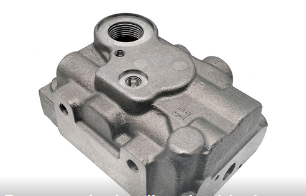
The Heavy Equipment Cleaning Challenge
The Contamination Is Different
Components coming off construction and mining machines carry contamination that is far heavier than typical automotive soils:
- • Packed-on grease mixed with dirt, sand, and metal fines around pins, bushes, and drivetrain parts
- • Hardened hydraulic oil and sludge inside pumps, motors, and valve blocks
- • Carbon and scale on large diesel engine components, turbochargers, and EGR systems
- • Rust and corrosion on components exposed to outdoor operation and moisture
- • Coolant scale and deposits in water jackets and oil coolers
- • Asphalt and bitumen residue in road-building equipment
A single large hydraulic cylinder head or final drive component can carry kilograms of grease.
The Parts Are Large and Heavy
Heavy-equipment components impose physical requirements that automotive machines cannot meet:
- Engine blocks and cylinder heads weighing hundreds of kilograms
- Hydraulic cylinders and rods a meter or more in length
- Large pumps, motors, and valve banks with dense internal galleries
- Final drive housings, differential cases, and gear assemblies
- Track components, pins, bushes, and swing bearings
Cleaning equipment must not only fit these parts but support their weight and be loadable by crane or forklift.
The Cost of Manual Cleaning
How Ultrasonic Cleaning Scales to Heavy Components
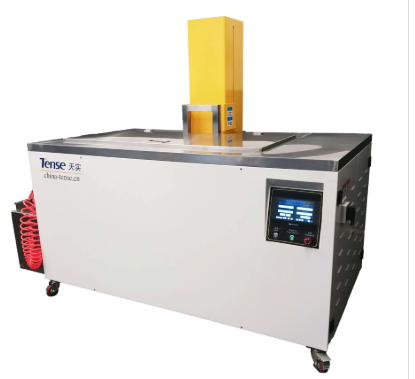
Lift Ultrasonic Cleaner TS-UD Series
Short Description:
The industry standard range of ultrasonic cleaning equipment ranges from 140 to 2300 liters capacity. They are designed for cleaning and descaling of all types of parts, components and accessories.
All equipment in this line can incorporate a lifting platform that facilitates loading and unloading of parts. They can also carry systems of filtration, separation of oils and water treatments, among others.
Cavitation Does Not Care About Geometry
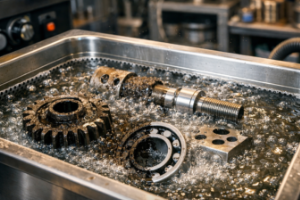
The same cavitation principle that cleans small parts applies to large ones: millions of microscopic bubbles implode across every wetted surface, including the interior of hydraulic galleries, oil passages, threaded holes, and the complex surfaces of pumps and valve blocks. For a heavy equipment workshop, this is transformative because the most critical and time-consuming cleaning is inside components where spray washers and brushes cannot reach.
Combining Heavy-Duty Parameters
Why Lifting and Agitation Matter at This Scale
For large housings with deep galleries and pockets, a lifting ultrasonic cleaner is the appropriate architecture. The load is raised and lowered through the solution, alternately flooding and draining internal passages. This pumping action:
- Drives air out of blind galleries so solution fills them
- Flushes heavy grease and loose contaminants out of housings
- Helps settle large parts into the bath without damage
- Improves rinse and drain between stages
Tense’s TS-UD lifting machines are purpose-built for this work, spanning tank capacities from 140 to 2,300 liters—large enough for complete engine blocks, hydraulic components, and batches of heavy parts, loaded by crane or hoist.
Application by Component
Hydraulic Pumps & Valve Banks
Highest-value targets. Life depends on clean oil. Ultrasonically clean housings, barrels, and plates. Use multiple rinses to clear galleries.
Hydraulic Cylinders & Rod Ends
Clean tubes and end caps after disassembly. Large cylinders require tank depth and length matched to the stroke components.
Diesel Engine Blocks & Heads
Removes carbon, oil gallery sludge, and scale. Cleans areas that hot-tank and spray methods leave contaminated.
Final Drives & Gear Assemblies
Housings carry heavy oil and metal fines. Clean with heavy-duty parameters to remove all metal fines before reassembly.
Coolers, Heat Exchangers, Pins & Bushes
Restores cooling efficiency by removing scale from internal matrixes. Pins and bushes can be cleaned in large batches to recover parts that would otherwise be scrapped.
The Heavy-Equipment Cleaning Workflow
Choosing the Right Equipment
Tense’s TS-UD lifting range address exactly this segment, having supplied industrial cleaning equipment since 2005 to customers including Caterpillar and Komatsu. Essential features include heavy-duty lifting mechanisms, filtration systems, and robust stainless steel construction.
Building the Business Case
Conclusion
Manual cleaning is slow and unable to reach critical hydraulic galleries. Large-capacity lifting ultrasonic cleaning is the difference between a rebuild line paced by labor and one paced by efficient, high-quality cleaning.
To size a lifting ultrasonic system for your largest components and workload, contact Tense.
FAQ
Q: What size ultrasonic tank does a heavy equipment workshop need?
A: It must accommodate your largest single component—often a complete engine block, cylinder head, or hydraulic assembly—with clearance for the basket and solution circulation.
Q: Can ultrasonics remove packed grease and mud from heavy parts?
A: It removes the grease and hardened oil, but bulk mud and loose earth should be pre-cleaned first to protect the bath and shorten cycles.
Q: How do I clean aluminum hydraulic pumps without damage?
A: Aluminum pump bodies require a neutral or mildly alkaline aluminum-safe detergent, moderate temperatures, and 40 kHz settings.
Q: Is the investment in large ultrasonic equipment justified for a service workshop?
A: Yes. The payoff comes from reclaiming skilled labor hours, shortening rebuild turnaround, and reducing hydraulic and engine warranty failures.