Turbocharger Cleaning with Ultrasonics: A Complete Workshop Guide
Introduction
Turbocharger rebuilding is a high-value, fast-growing business. Modern diesel and gasoline engines rely on turbocharging for performance and emissions, and every turbo eventually comes in with the same combination of problems: carbon-choked turbine wheels, oil-fouled center housings, blocked oil passages, and coked bearing bores. The cleaning challenge is unusual because a turbocharger combines aluminum housings, steel shaft and wheel assemblies, precision bearings, and some of the most stubborn baked-on carbon found anywhere in an engine. Clean it incorrectly and you risk the rotor balance and oil flow that a rebuilt turbo depends on. This guide explains how to use an ultrasonic cleaning machine to clean turbocharger components thoroughly, safely, and profitably.
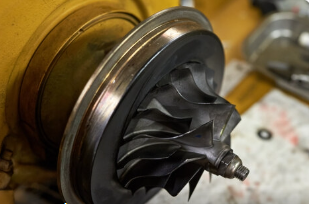
Why Turbochargers Get So Contaminated
The Two Sides of a Turbo
A turbocharger operates with two very different environments:
- • Turbine side (hot end): exhaust gases drive the turbine wheel. This side accumulates hard carbon, soot, and heat-coked oil on the turbine housing, turbine wheel, and wastegate components, sometimes building up to a thick, brittle scale.
- • Compressor side (cold end): filtered intake air drives the compressor. The compressor wheel and housing carry oil mist from breather systems, dust, and greasy film rather than hard carbon.
Between them, the center housing rotating assembly (CHRA) carries the shaft, bearings, seals, and oil passages, where degraded oil turns into sludge and coke that starves the bearings.
The Critical Failure Modes
Most turbo failures are lubrication-related. Carbon and sludge in the oil feed and drain galleries restrict oil supply to the bearings, leading to shaft play, seal failure, and catastrophic wheel-to-housing contact. During rebuilding, every oil passage must be completely clear, and the bearing bores must be free of contamination. Residual carbon on the turbine also causes imbalance and wastegate sticking. Cleaning is therefore not cosmetic—it is central to the reliability of the rebuild.
Why Traditional Cleaning Struggles
Turbo rebuilders have historically relied on a combination of methods, each with serious weaknesses:
These methods force a trade-off between speed and safety. Ultrasonic cleaning avoids that trade-off by removing carbon and sludge chemically and mechanically without abrasive media.
Ultrasonic cleaner TS series

Short Description:
How Ultrasonic Cleaning Works on Turbo Components
Cavitation Against Carbon and Coke
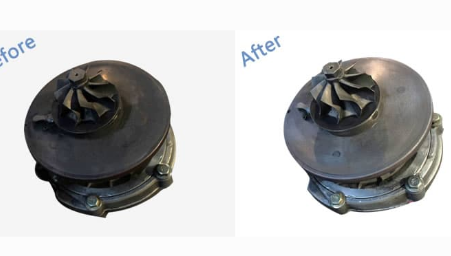
Cavitation—the implosion of millions of microscopic bubbles in heated detergent—works into the pores and cracks of carbon deposits, progressively lifting them from the metal surface without removing parent metal. Combined with heat that softens coked oil and an alkaline detergent that attacks the deposits, an industrial ultrasonic cleaner can restore cast housings and wheels to a clean, uniform state with no media residue.
Components to Clean Separately
Recommended Parameters by Component
Cast Iron Turbine Housings
Frequency: 28–40 kHz
Temperature: 60–70°C
Cycle: 15–30 minutes
Aluminum Components
Frequency: 40 kHz with sweep
Temperature: 50–60°C
Cycle: 5–15 minutes
The Step-by-Step Turbo Cleaning Workflow
Disassemble: Separate housings, CHRA, wheels, and hardware.
Group: Categorize parts by material (Iron vs Aluminum).
Wash: Run ultrasonic cycles with matched parameters.
Verify: Flush galleries and confirm full oil flow.
Equipment & Profitability
Tense’s TS Series handles bench and batch turbo cleaning, while the TS-UD lifting machines (140 to 2,300 liters) suit production environments. The lifting action is vital for flushing oil galleries.
Dramatically less manual work per unit.
No abrasive media risk in castings.
Consistent gallery cleanliness reduces warranty.
Conclusion
Turbocharger rebuilding stands or falls on two things: clean oil passages and clean, undamaged rotating and VNT components. Ultrasonic cavitation removes both hard exhaust carbon and bearing-choking sludge without media and without removing parent metal, reaching every passage the solution touches.
For equipment recommendations matched to your turbo rebuilding volume, contact Tense.
FAQ
Q: Is ultrasonic cleaning better than glass beading for turbo housings?
A: For most rebuilding, yes. Ultrasonic cleaning removes carbon without leaving embedded abrasive media that can later destroy bearings. Ultrasonic cleaning is the safer, more consistent process.
Q: Can I clean the assembled CHRA in an ultrasonic cleaner?
A: No. The center housing rotating assembly should be disassembled so old bearings and seals can be removed and all oil passages can be fully cleaned.
Q: How do I protect aluminum compressor wheels while cleaning?
A: Use a neutral or mildly alkaline aluminum-safe detergent, keep temperature around 50–60°C, and use 40 kHz with sweep. Never use strong alkali on aluminum.