The Truth About Inconsistent Cleaning Results (And How to Fix It)
If you have ever pulled a batch of parts from your cleaning station and found that some came out spotless while others still had visible residue, you have experienced the problem of inconsistent cleaning results. This variability is one of the most frustrating—and costly—issues in industrial parts cleaning. It leads to rework, quality rejects, customer complaints, and a constant sense that your cleaning process is unreliable. But why does inconsistent cleaning happen, and what can you do about it? In this article, we explore the root causes of inconsistent cleaning results and explain how an industrial ultrasonic cleaner can deliver the repeatable, predictable cleaning performance that modern manufacturing and maintenance operations demand.
The single biggest cause of inconsistent cleaning is human variability. When cleaning is done by hand—whether with brushes, spray guns, or wipes—the quality of the result depends on:
- The operator’s skill and experience level
- How much time they spend on each part
- The technique they use (scrubbing direction, pressure applied)
- Their energy level and focus at that moment
- How well they understand the cleanliness requirements
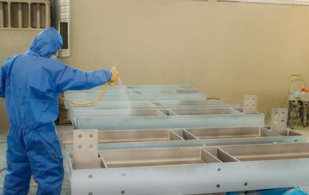
Even the most diligent operator will produce varying results from one part to the next. And when multiple operators are working on the same line, the variability increases exponentially.
This is not a criticism of workers—it is simply a fact of human performance. People are not machines, and we cannot expect machine-like consistency from manual processes.
You might assume that automated spray washers would solve the consistency problem, and they do—partially. Spray systems eliminate the human factor, but they introduce their own sources of variability:
- Shadowing and coverage gaps: Parts positioned in certain ways can block the spray from reaching other parts or other surfaces of the same part. Complex geometries create shadow areas that the spray simply cannot reach.
- Nozzle wear and clogging: Over time, spray nozzles wear out or become clogged with debris, changing the spray pattern and reducing cleaning effectiveness. If maintenance is not performed on a strict schedule, performance degrades gradually and often goes unnoticed.
- Load configuration: How parts are loaded into the washer—their orientation, spacing, and arrangement—has a huge impact on cleaning results. Different operators load parts differently, leading to different outcomes.
- Solution concentration: The cleaning solution concentration can drift over time as water evaporates and detergent is consumed, affecting cleaning power.
The result is that even automated spray systems can produce inconsistent results from batch to batch, and even within the same batch.
The cost of inconsistent cleaning goes far beyond the time spent re-cleaning parts. When parts with hidden contamination make it through to downstream operations, they can cause:
- Coating and plating failures: Residual oil or grease prevents proper adhesion of paint, powder coat, or plating
- Assembly issues: Contamination on sealing surfaces causes leaks; contamination in bearings causes premature wear
- Quality rejects: Parts that fail cleanliness testing must be re-cleaned or scrapped
- Customer complaints: When customers receive parts that are not properly cleaned, it damages your reputation and can lead to lost business
In many industries, the cost of poor cleaning quality is measured not just in rework time, but in warranty claims, product returns, and lost contracts.
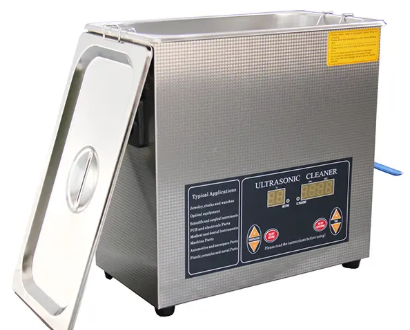
Tense industrial cleaning equipment factory was established in 2005; our cleaning equipment has passed ISO9001 quality system certification, EU CE, ROHS certification. Our cleaning equipment is exported to many countries, and has a long-term cooperative relationship with well-known brands such as Bosch , Caterpillar; Komatsu and other enterprises.
The fundamental reason why ultrasonic cleaning machine systems deliver such consistent results is the nature of the cleaning mechanism itself. Ultrasonic energy is distributed throughout the entire volume of the cleaning tank by transducers mounted on the tank walls and/or bottom. This creates a uniform field of cavitation bubbles everywhere the solution goes.
Unlike a spray nozzle, which directs cleaning energy in a specific direction, ultrasonic energy is omnidirectional. It reaches every surface that is exposed to the cleaning solution—top, bottom, sides, inside, outside—with the same intensity. There are no shadow areas, no coverage gaps, no spots that the cleaning energy cannot reach.
As long as a part is fully submerged and the solution can circulate around it, every surface will be cleaned to the same standard. This is true regardless of where the part is placed in the tank, how it is oriented, or what other parts are in the same batch.
Another key factor in consistency is that ultrasonic cleaning is a highly controllable process. The main parameters—time, temperature, and power—are all precisely set and monitored:
- Time: Digital timers ensure that every batch receives exactly the same cleaning duration
- Temperature: Thermostatically controlled heaters maintain the solution at a precise setpoint
- Power: The ultrasonic generator delivers consistent power output cycle after cycle
- Detergent concentration: With proper maintenance, solution concentration can be kept within a narrow range
Because all of these parameters are controlled and repeatable, the cleaning result is also repeatable. If you clean a batch of parts today using the same parameters you used last week, you will get the same result. This predictability makes it much easier to plan production, set quality standards, and meet customer requirements.
While ultrasonic cleaning is inherently more consistent than other methods, there are still steps you can take to maximize consistency:
- Use consistent loading patterns: Train operators to load parts the same way every time
- Ensure full submersion: Parts must be completely below the solution surface
- Allow solution circulation: Leave space between parts so the cleaning solution can circulate freely
- Use fixtures: Custom fixtures hold parts at the optimal angle and prevent them from shifting during cleaning
- Avoid overloading: Do not pack the basket so tightly that solution cannot reach all surfaces
The condition of the cleaning solution directly affects cleaning consistency:
- Filter regularly: Filtration removes particulate contaminants that can redeposit on parts
- Monitor concentration: Check detergent concentration regularly and top up as needed
- Change solution periodically: Even with filtration, the solution will eventually become saturated with contaminants and need to be replaced
- Maintain temperature: A stable temperature ensures consistent chemical activity and cavitation performance
To ensure ongoing consistency, it is good practice to validate your cleaning process:
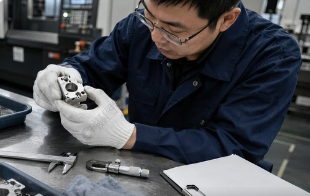
- Establish cleanliness standards: Define what “clean” means for your parts, whether visual, tactile, or measured
- Test regularly: Periodically verify cleaning results using your chosen method
- Document parameters: Record the time, temperature, and detergent concentration for each cleaning recipe
- Train operators: Make sure everyone who uses the machine understands the process and follows the same procedures
When your cleaning process is validated and documented, you can have confidence that every batch will meet your quality standards.
Consistent cleaning results have a direct impact on your bottom line. When you know that every part will come out clean the first time, you can:
- Eliminate rework time and labor costs
- Reduce scrap rates from cleaning-related damage
- Plan production schedules more accurately
- Meet customer quality requirements consistently
- Reduce warranty claims and field failures
The cost savings from eliminating rework alone often justify the investment in a quality industrial ultrasonic cleaner.
When your customers know they can rely on you to deliver consistently clean parts, it strengthens your relationship and makes you a more valuable supplier. In industries where cleanliness is critical—automotive, aerospace, medical—consistent quality can be a key competitive differentiator.
Inconsistent cleaning results are a common and costly problem in industrial parts cleaning. Whether caused by human variability in manual processes or inherent limitations of spray washing systems, inconsistency leads to rework, quality issues, and customer dissatisfaction.
Industrial ultrasonic cleaner technology solves this problem at its source. By delivering uniform cavitation energy throughout the cleaning tank and operating with precisely controlled parameters, ultrasonic cleaning produces consistent, repeatable results batch after batch. Every part comes out to the same high standard, regardless of its position in the tank or who loaded it.
If inconsistent cleaning results are holding back your operation, it may be time to consider the switch to ultrasonic technology. To learn more about how consistent ultrasonic cleaning can improve your quality and reduce your costs, explore the range of industrial solutions at Tense.