How Ultrasonic Cleaning Works for Engine Remanufacturing: Complete Process Workflow
Engine remanufacturing is one of the most demanding industrial cleaning applications. Rebuilt engines must meet or exceed OEM specifications, and residual carbon, old oil, or casting sand left in oil galleries or coolant passages causes premature bearing failure, oil pressure problems, and overheating. Industrial ultrasonic cleaning has become the gold standard in professional engine remanufacturing, replacing hot tanks, jet washers, and hand scraping.
Why Engine Remanufacturing Cleaning Is Uniquely way
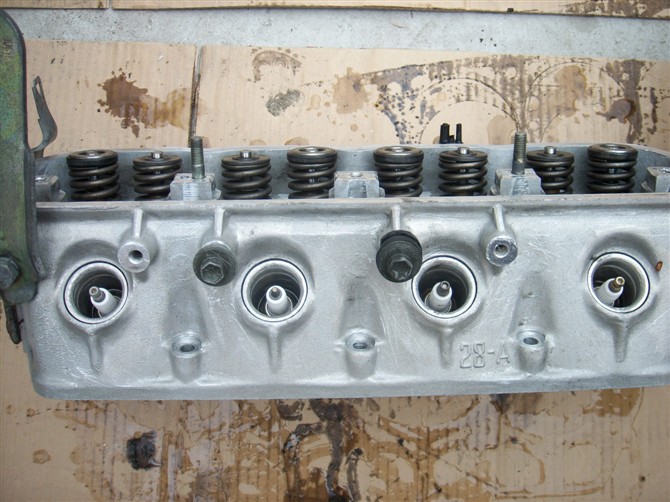
(Before cleaning)
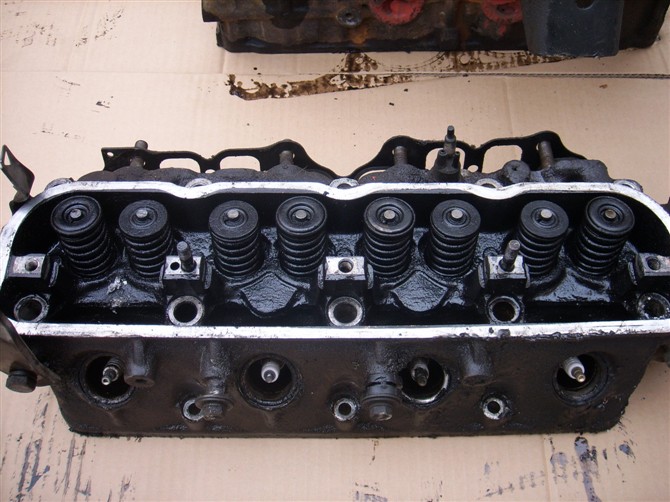
(After cleaning)
Engine components present a combination of difficulties unmatched in most other industries:
- • Complex internal geometry — oil galleries, coolant jackets, lifter bores, and cross-drilled passages trap contaminants deep inside castings
- • Multiple soil types — baked-on carbon, oxidized oil, varnish, rust, gasket residue, and metallic swarf, all on the same part
- • Mixed materials — cast iron blocks, aluminum heads, steel crankshafts, brass core plugs, and bearing inserts
- • Critical cleanliness requirements — even microscopic particulate can score bearings or plug oil jets
- • High part value — engine blocks and heads represent significant investment; cleaning damage is extremely costly
How Ultrasonic Cleaning Solves These Problems
Unlike spray washing — which only cleans line-of-sight surfaces — ultrasonic cavitation reaches every submerged surface, including deep inside oil galleries and coolant passages.
Key Benefits for Engine Remanufacturing:
1. Complete Internal Passage Cleaning Cavitation bubbles travel with the liquid, penetrating every oil gallery, coolant passage, and blind hole. This is the single most important advantage — no other method reliably cleans the full length of cross-drilled oil passages in crankshafts, connecting rods, and cylinder heads.
2. Carbon Removal Without Abrasion Baked-on carbon in combustion chambers and on piston tops is lifted by cavitation without glass bead blasting or harsh chemical strippers. This preserves valve seat geometry and combustion chamber volume — critical for compression consistency across cylinders.
3. Consistent, Repeatable Results Every part loaded into the tank receives identical cleaning energy. Unlike hand work that varies by technician, ultrasonic cycles produce the same result batch after batch, shift after shift.
4. Dramatic Labor Reduction A single operator can load parts, start the cycle, and perform other tasks while cleaning runs automatically. What previously took hours of hand scraping and brushing is completed in 15–30 minutes of unattended cycle time.
5. Surface-Safe Cleaning Ultrasonic energy does not erode machined surfaces, bearing journals, or threaded features — unlike aggressive media blasting or acid dipping.
Recommended System Configurations
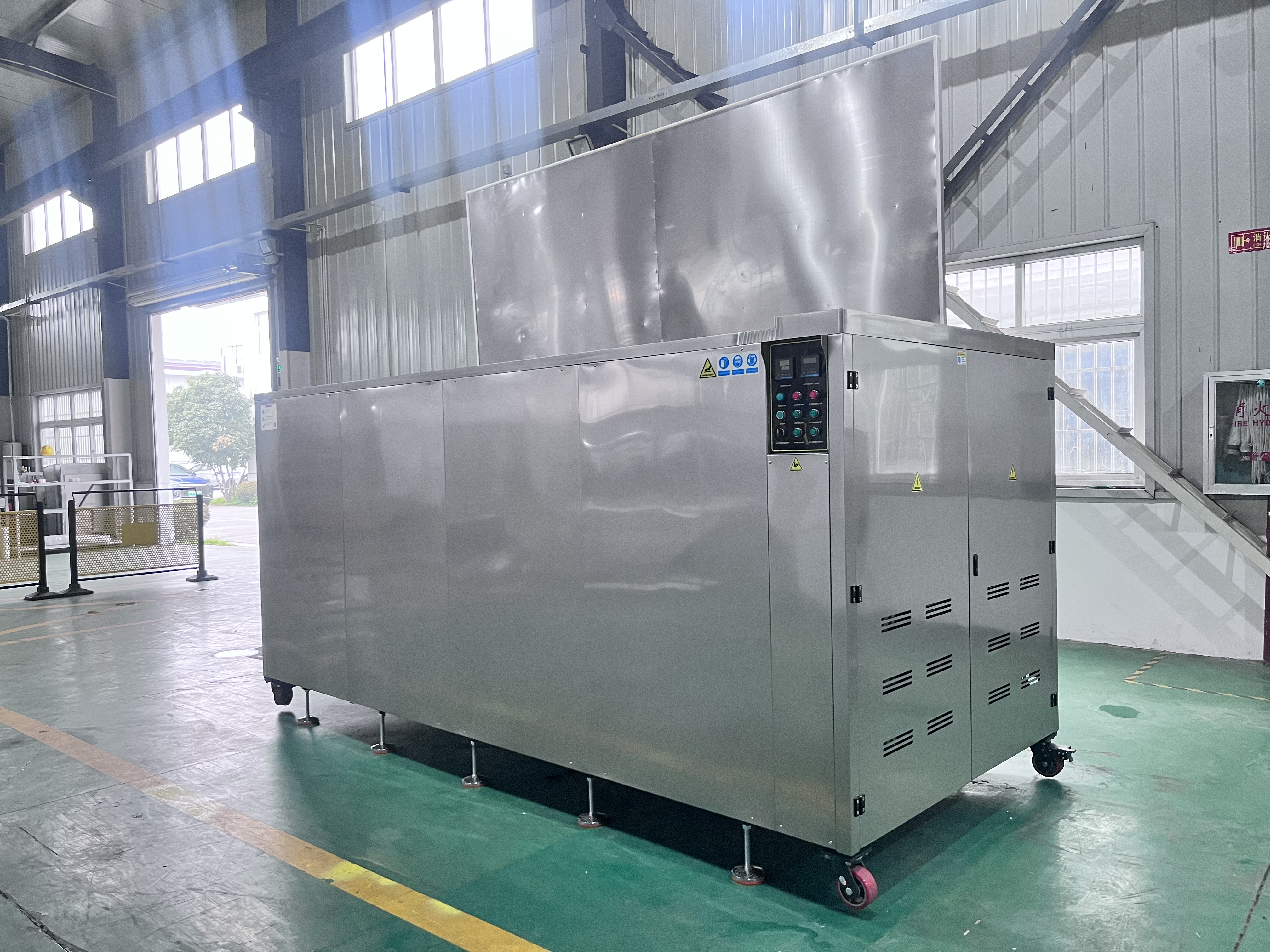
Entry-Level: Single Heavy-Duty Tank
Ideal for smaller rebuild shops and cylinder head specialists.
Typical specifications: – 1,000–3,000 liter tank capacity – 25 kHz low frequency for aggressive carbon and grease removal – 316L stainless steel construction – Oil skimmer and 25-micron filtration – Overhead hoist loading – Typical cycle: 20–30 minutes per load
Production-Level: Multi-Stage Automated Line
For high-volume remanufacturers processing 20+ blocks or heads daily.
Standard 4-stage configuration: 1. Pre-wash / soak station — softens heavy carbon and grease 2. Primary ultrasonic wash — main cleaning stage at 25 kHz 3. Ultrasonic or spray rinse — removes detergent and loosened particulate 4. Hot air drying + rust inhibitor — prevents flash rust on cast iron
Fully automated gantry systems move parts between stages without operator intervention, maximizing throughput. Tense engineers custom engine remanufacturing ultrasonic cleaning lines for facilities worldwide.
Process Best Practices
Pre-Cleaning Preparation
1. Remove all external components — sensors, plugs, bearings, and seals before cleaning
2. Knock off bulk grease — a quick pre-rinse or steam clean extends bath life dramatically
3. Plug sensitive openings — cover bearing bores if concerned about particulate embedment (rare with proper filtration)
Part Loading Technique
- • Position parts so internal passages are not trapped with air — rotate blocks and heads so galleries fill completely
- • Use custom fixtures to keep parts separated and ensure uniform sound field exposure
- • Avoid stacking parts that create shadow zones
- • Skim oil daily — floating oil redeposits on parts as they exit the tank
- • Filter continuously — replace filter cartridges when differential pressure exceeds specification
- • Change detergent solution based on soil load, not just calendar schedule
- • Monitor temperature — keep within 55–65°C for optimal cavitation and detergent performance
- • Rinse thoroughly to remove detergent residue
- • Dry immediately with forced hot air to prevent flash rust on cast iron
- • Apply rust inhibitor if parts will be stored before assembly
- • Blow out oil galleries with compressed air as a final verification step
Bath Maintenance
Post-Cleaning
Quality Verification Methods
Professional remanufacturers verify cleaning effectiveness using: – White glove / white cloth test — wipe internal passages with clean cloth, inspect for discoloration – Endoscope inspection — visual check of oil gallery interiors – Particle count — flush passages with clean solvent and filter/weigh residual particulate – Oil flow testing — measure flow rate through galleries to confirm no restriction
Conclusion
For engine remanufacturing, industrial ultrasonic cleaning is no longer a luxury — it is a quality requirement. The ability to clean internal passages completely, consistently, and with minimal labor directly improves rebuild reliability, reduces warranty claims, and increases shop throughput. Whether starting with a single heavy-duty tank or upgrading to a fully automated multi-stage line, the investment in proper ultrasonic equipment pays for itself quickly in labor savings and quality improvement.
Explore custom engine remanufacturing cleaning solutions at Tense Industrial Cleaning.
Frequently Asked Questions
Q: Will ultrasonic cleaning remove baked carbon from cylinder heads? A: Yes. With 20–28 kHz frequency and a formulated alkaline carbon-removing detergent, ultrasonic systems effectively remove baked carbon from combustion chambers and valve seats in 15–30 minute cycles.
Q: Can aluminum heads and cast iron blocks be cleaned in the same bath? A: Yes, with proper detergent selection. Use a pH-neutral or mildly alkaline cleaner formulated for mixed-metal cleaning. Highly caustic solutions can etch aluminum over extended exposure times.
Q: How do I prevent flash rust on cast iron after ultrasonic cleaning? A: Dry parts immediately with hot forced air, then apply a water-based rust inhibitor dip or spray. For long-term storage, use a vapor corrosion inhibitor (VCI) packaging. Adding a rust inhibitor to the final rinse stage is the most efficient approach.
Q: What size tank do I need for engine blocks? A: Most inline 4 and V6 engine blocks fit in a 300–1000 liter tank. V8 diesel blocks typically require 3,000+ liters. Tense can custom-size tanks for large bore engines, marine diesels, and locomotive blocks.