Are Your Cleaning Chemicals Still Legal? A Solvent & VOC Compliance Guide
Are Your Cleaning Chemicals Still Legal? A Solvent & VOC Compliance Guide
Essential insights into the evolving landscape of industrial cleaning regulations and modern sustainable solutions.
Introduction
For decades, solvents like trichloroethylene (TCE) were the default choice for degreasing metal parts in workshops around the world. They were fast, effective, and dried spot-free. Today, that same familiar chemical closet may be exposing your business to serious legal and financial risk. Environmental rules on solvents and volatile organic compounds (VOCs) have tightened steadily across North America, Europe, and much of Asia, and enforcement is no longer aimed only at large factories. Small job shops and remanufacturers are being audited, fined, and in some cases forced to shut down degreasing lines. This guide explains what is changing, how to tell whether your current cleaning chemicals are still legal, and how modern water-based ultrasonic cleaning machine technology makes compliance not just achievable but profitable.
Why Solvent Regulation Is Tightening
The Chemicals Under Scrutiny
The solvents historically used in vapor degreasing and cold cleaning carry a combination of health and environmental hazards that regulators have moved decisively to control:
- ✕ Trichloroethylene (TCE): Long the workhorse of vapor degreasing, classified as a carcinogen, with strict restrictions on worker exposure.
- ✕ Methylene chloride: Linked to acute fatalities from inhalation exposure and cancer.
- ✕ Perchloroethylene (PERC): A suspected carcinogen heavily restricted in metal cleaning.
- ✕ n-Propyl bromide (nPB): Recognized as a reproductive and neurological hazard.
- ✕ Mineral spirits: High in VOCs, contributing to smog and subject to emissions limits.
What Regulators Are Controlling
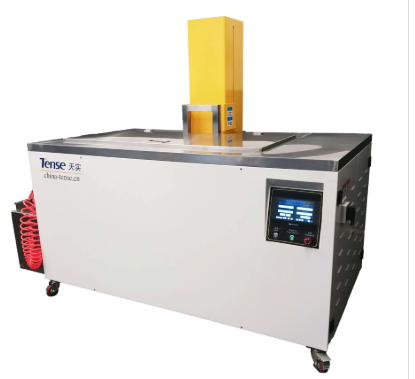
Lift Ultrasonic Cleaner TS-UD Series
Short Description:
Regulation does not rely on a single rule. It works through several overlapping mechanisms:
How to Check Whether Your Chemicals Are Still Legal
A Facility Self-Audit
Work through this checklist with every cleaning chemical in your shop:
List every product used for degreasing.
Pull the Safety Data Sheet (SDS) & check CAS numbers.
Flag TCE, methylene chloride, PERC, and nPB.
Check VOC content against local limits.
If you cannot answer any of these confidently, speak with an environmental compliance professional immediately.
The Hidden Cost of Staying on Solvents
Solvent-based cleaning carries a stack of costs that become visible when you examine total cost of ownership: Premium purchase costs, evaporation loss, hazardous waste disposal fees, and liability risks.
How Water-Based Ultrasonic Cleaning Solves the Compliance Problem
Replacing Chemistry with Energy
An ultrasonic cleaning machine uses high-frequency sound waves to create cavitation—millions of microscopic bubbles that implode against every wetted surface, scrubbing away oil and grease without toxic chemicals.
Low VOC
Biodegradable detergents avoid heavy emissions regimes.
Safe Environment
No flammable vapors or carcinogenic exposure for workers.
Cost Efficient
Easier wastewater management and reduced disposal fees.
Planning a Compliant Conversion
Step 1: Define Requirements
Document materials, soil types, and throughput.
Step 2: Validate with Trials
Run real production parts through a water-based process.
Step 3: Design the Sequence
Plan wash, rinse, and drying stages.
Step 4: Manage Transition
Train operators and update SDS documentation.
Step 5: Size for Growth
Choose equipment like Tense’s TS Series for long-term reliability.

Conclusion
The global trend is clear: lower VOC limits and tighter restrictions. A water-based ultrasonic cleaning machine removes most hazardous obligations while improving results on complex geometries.
Ready to evaluate a compliant aqueous cleaning process?
Frequently Asked Questions
Q: Is trichloroethylene (TCE) banned where I operate?
A: It depends on your country and industry, but TCE is banned for many uses in the EU and heavily restricted in much of the US. Always check current regulations with your local environmental authority.
Q: Can water-based ultrasonic cleaning really remove heavy grease as well as solvent?
A: Yes. The combination of cavitation, heated (50–70°C) alkaline detergent, and adequate cycle time removes heavy grease, oil, and carbon effectively from most metal parts.